

What Are Artists Owed?
Praise and Understanding Are Earned, Or Should Be

At the risk of sounding self-absorbed, or even ambitious, I will admit that I do, in fact, monitor my Substack dashboard. And for the latter half of last year, I was confronted with a mighty New Subscriber plateau and some of the lowest engagement since I started self-publishing nearly four years ago, but who’s counting? Of course, I kept on writing and self-publishing anyway, either because I simply do this for the love of the game or because I don’t know how to take hints, or both.
Since I’m a basic, unabashed lover of all things mainstream, the things I’m interested in writing about and the things people click on often overlap. I don’t chase the algorithm per se, but rather the algorithm is the water I swim in. And on occasion, I’ll publish a fresh perspective on a buzzy topic, right as it’s hitting its stride in the news cycle, right as that mysterious algorithm decides to shine a little extra sun on me, and I’ll receive an influx of new readers. And if I’m being completely honest with you, when that happens, the gratification is intoxicating. It’s the kind of validation that you try hard to disregard out of fear that it won’t happen again. The kind of pridefulness that God would smite.
But for every few comments that express excitement in discovering my publication, or offer a compelling critique of my work, there will be at least one hateful, garbled one that I will earnestly try and fail to understand. A comment that indicates that the reader didn’t read the whole piece, or only chose to fixate on one line from it. Or a comment indicating that the reader straight up doesn’t like my writing at all.
I’ll try to leave a composed response, and sometimes we come to an understanding, even if we disagree. But more often than not, the commenter will double down on their opinion, having read my reply or not. Or they’ll refrain from following up at all, passing on like a coyote in the night. A flash of their teeth, then, poof, vapor. This is the challenge, of course, of self-publishing on the internet, one of the most public spheres we have. You can’t guarantee meaningful engagement, and you certainly can’t win them all over.
When I lived in New York, I used to complain that people walking on the sidewalks needed to have more spatial awareness. New York pedestrians need to check their blind spots on the pavement and pull off to the side when looking up directions on their phones. This is a public space, and they need to share the road, I would say. My boyfriend would retort that since these are public streets, I’m the one who actually needs to be more patient. What does the “public” owe me, exactly?
What does the public owe me? It’s a question I consider as I think about my writing career. It also reminds me of the criticism pop stars receive after requesting privacy and general “understanding” from the public. Not that I think I’m a pop star, or anything.
Aren’t we owed the ability to say whatever we want about pop stars online, whether we’ve thoughtfully engaged with their work or not, given they’re flush with fortune and attention? Aren’t we owed certain access to them since we stream their music and spend hundreds of dollars on concert tickets? And, on the flip side, aren’t the artists owed a certain amount of grace and privacy as public figures who already share so much of themselves for their jobs?
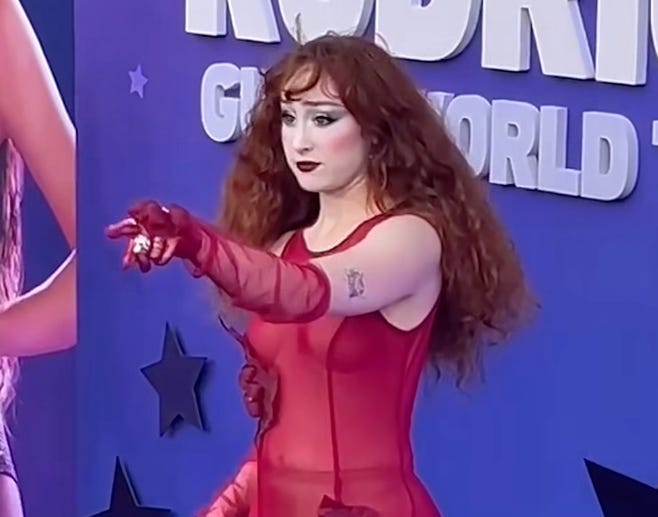
Over the past couple of years, Chappell Roan has been the poster celebrity for setting boundaries with fans, positioning her relationship with her supporters as starkly non-parasocial. Her critics posit that she asked for this life, that her being a public figure necessitates people having constant access to her, especially when she’s in public spaces. The question isn’t exactly what the public owes her, but what she owes the public as a result of choosing a highly visible career. And the answer, to many, is that she owes everyone everything, since we’re the ones monetarily and symbolically propping up her success. We’re stockholders in the publicly held company that is Chappell Roan.
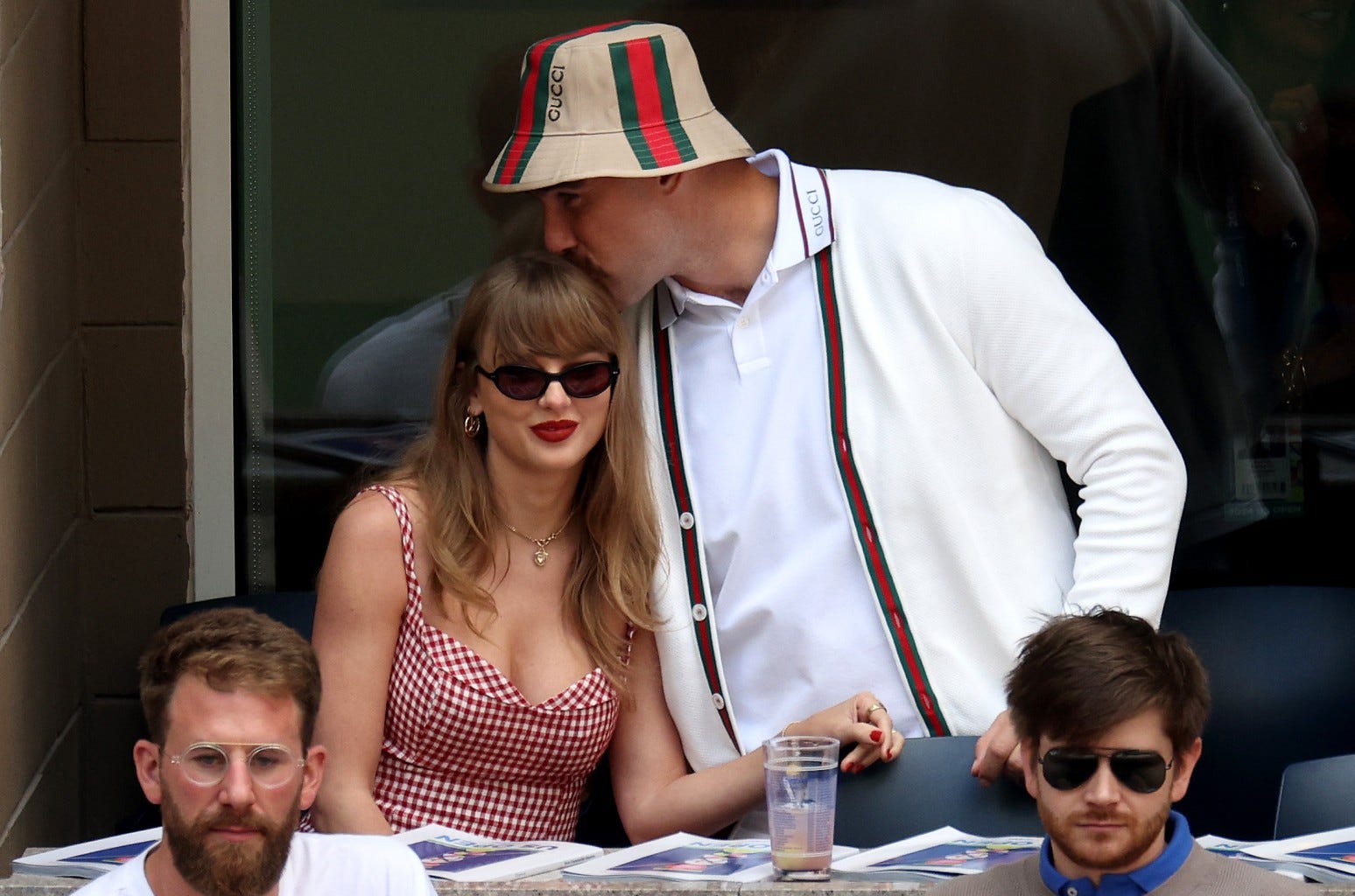
On the other hand, Taylor Swift is an artist who leverages parasocaility for her own gain, who can now turn whole media narratives in her favor, seemingly making everyone understand her, even if it’s just her own cacophony of followers. Swift and the Swifties possess a kind of mutual debt to one another, quietly and loudly delivering and demanding more from the other, whether it’s the purchase of more vinyl variants, the disclosure of more personal lore in songs, or a kind of unflinching loyalty, resulting in collectively back-turning on people Swift is feuding with, whether she asks them to or not.
Blind idolship and blind condemnation are both detrimental to meaningful engagement. In the case of Taylor Swift, and increasingly, Chappell Roan, one crop of people has grown inordinately fond of her, while the other has grown inordinately hateful, which has led to our inability to say anything wholly significant on either side of the fence.
Online conversations are perhaps more nuanced than tabloid stories or Pop Base tweets, but they will never be as nuanced as face-to-face interactions, where either interlocutor has a greater chance of understanding the other. Online, responses are sent and received with delays, allowing conversations to lose real-time dynamism and momentum. Positions get misconstrued, trolls commit willful ignorance, and users often approach other users presuming negative intent. Of course, these things happen in real life too, but there’s a greater chance that the person you’re speaking to is fully hearing what you’re saying.
A fear of misunderstanding, or worse, fear of dissent, and eagerness to grow, motivates writers to frontload their material with paragraphs of toothless disclaimers, warning that their point of view may not apply to every single situation or every single reader at every single time of day, instead of an actually compelling argument. This outsized fear and appetite lead to inoffensive, voiceless girls-be-like, internet-be-like, and celebrities-be-like writing. It leads to writing that many are probably mistaking for AI, when it’s really just flattened human input and output, published with a shaky hand.
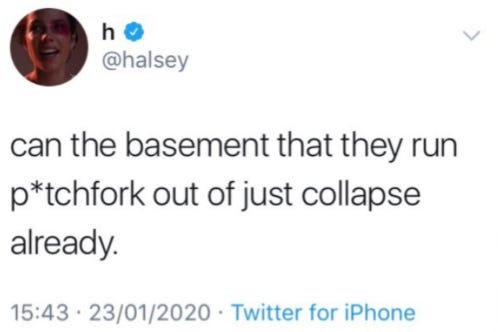
What does the public owe you, as someone putting work into the world, be it a blogger or a pop star? Are you owed the presumption of positive intent or attentive readership? Many believe they are, whether they’re Substackers bemoaning their lack of growth on Notes feeds, churning out recycled thesis statements, or artists publicly scorning Pitchfork, growing misty-eyed at an Album of the Year loss.
And what are you owed as a reader or listener? Is either party really owed nuanced, meaningful engagement before opinions are drawn up? I guess not, I guess none of that is explicitly promised anywhere. But, as a writer seeking meaningful engagement with readers, I often wish I knew whether my readers were fully engaging with my work before I respond to their damning comments. And, conversely, as a reader, I often feel entitled to the opinions I have, even when I merely skim the work’s surface.
Publishing online is sometimes akin to an English teacher standing at the front of their classroom, posing a thoughtful question to a room of bored, restless high schoolers; the symbolic score is rarely settled. Neither debt is fully paid by the artist or the consumer. Nobody’s itch is fully scratched. Neither side ends up fully happy, expecting something that the other can’t adequately provide due to a near-perpetual lapse in understanding.
As true as it ever was, the great challenge in creating and consuming anything is being totally understood and totally understanding. And the fact that it doesn’t always happen is fuel enough to keep trying to make it so.
A few months ago, Eliza McLamb broke a story on her Substack about Chaotic Good, a digital music marketing company that helps artists grow, in part, by manufacturing fake fan accounts and influencing public opinion in social media comments. McLamb writes about how surprising it was to learn that Geese, a rock band that positions themselves as “raw” and “counter-cultural,” uses this type of service. But as a musician herself, she acknowledges how tempting it would be to leverage a career-boosting service like Chaotic Good to bypass the slow drudgery of bootstrapped self-promotion. A service like this would manufacture meaningful engagement and mass understanding.
I similarly imagine that many writers on Substack would wave a magic wand, if they could, to materialize writerly success and tailor online reception in their favor, not unlike how Swift can flick her wrist and mobilize her attentive army, or how Andrew Tate can import one million loyal email addresses upon launching his own Substack publication.
But truly fruitful creative careers and meaningful engagement are forged through years of friction, disagreement, and misinterpretation, through convincing the public that you have something important to say and them trusting your convictions, often over time. We all risk misperception and disdain when we make our work public. We aren’t owed an accurate or favorable interpretation, and we will never achieve it in full. But it’s fun to try to get close, and with enough elbow grease, we can certainly approximate it.
Sooo true. I have a couple genuine satire pieces on here and I'm always hedging while drafting them because I KNOW someone's gonna misunderstand it. Then I remind myself that doing so gives up the whole bit and delete all my explainers... people misunderstanding is either inherent feedback on your writing, or part of the fun!
Everyone wants to pretend they are above metrics until the numbers dip. (I'm everyone, everyone is me). Growth is intoxicating because it makes the private act of writing feel externally confirmed and it only takes one hostile comment to puncture the whole thing. This was so relatable, Madison.