

Obsessed With Adding Subtext
Obsession Isn't Deep and That's Okay

Contains spoilers for Obsession (2026)
There comes a time in each of our lives when we need to hop on a bandwagon, for the sake of fostering community and furthering anthropological inquiry. You see it time and time again in sports, when the World Cup or the Olympics roll around, or when a team like the Knicks wins their first championship in fifty-three years. You see it occur year after year when a soundbite from Love Island goes viral, and countless people sprint to catch up on the tens of hours of CCTV footage that’s already been captured in the season so far.
Similarly, the second a buzzy horror movie reaches watercooler status, I’m inclined to want to see it, since there’s virtually no other reason I’d subject myself to horror otherwise. I am famously squeamish, the type to jump at the sound of a car door being shut too loudly outside my apartment building. But when the general public opts into collectively enjoying a horror movie, I join them, allowing the beat-to-death memes and discourse to shield me from nightmares like a fuzzy blanket. Rampant, baroque commentary has a way of squashing the romantic and spooky, taking me out of my amygdala and into my prefrontal cortex, for better and usually for worse.
I saw Obsession several weeks ago, on my own volition, eager to see what all the hullabaloo was about, to climb aboard the bandwagon. I know enough about movies to know that a horror movie earning a 94% on Rotten Tomatoes is a rarity, and that a movie with a first-time director and a measly $750k budget earning nearly $300M worldwide is insane. Obsession is now Focus Features’ most profitable movie of all time, and is outperforming The Devil Wears Prada 2 and the latest Star Wars IP.
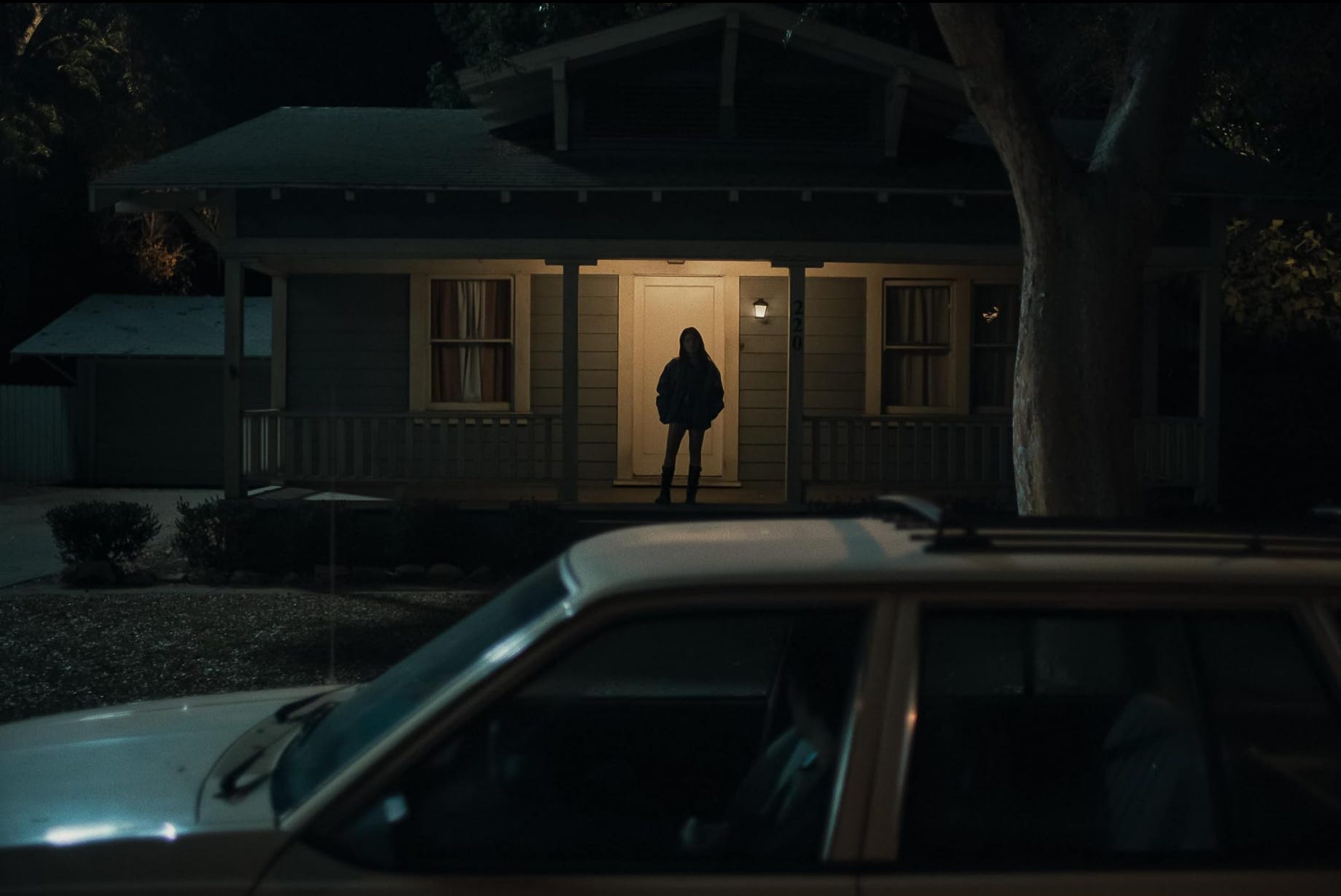
The movie is a delightfully direct popcorn horror flick, what viewers have come to expect and love from Blumhouse Productions, the studio behind Insidious (2010), The Purge (2013), and the Paranormal Activity franchise. Obsession takes place in an unspecified American suburb, starring young adults of unspecified drinking ages dressed in clothing that could belong in any year post-2012. The premise is equally simple and stampable: Bear has a crush on Nikki but is afraid to tell her how he feels. He offhandedly makes a wish on a “One Wish Willow,” a gimmicky collectible he got from a woo-woo crystal store in town, that Nikki would “love him more than anyone in the world,” and it comes true, unbeknownst to him.
Bear is hesitant and confused about Nikki’s sudden attraction to him, but soon takes to it quickly, not asking many questions. They’re a bit attached, but no more affixed than two twenty-somethings adrift in puppy love. Then, Nikki’s attachment becomes increasingly possessive and controlling. She stands in the corner of the room watching him sleep, wails in response to any disagreements, and protests that he doesn’t love her as much as she loves him. She waits in the foyer like a dog after he leaves for work, involuntarily defecating on the carpet as she stares at the front door with a pained, fixed smile. What starts as juvenile jealousy and insecurity turns violent as Nikki lashes out rabidly when Bear spends time with other people.
When things start going south, it dawns on Bear that this turbulent behavior, this whole situation, is because of his wish coming true. In one of the film’s funnier scenes, he calls the “number on the box” of the One Wish Willow and asks an unhelpful customer service rep if he can alter his initial request to no avail. A little further into the film, it also becomes clear that the “Old Nikki” is still present, sharing her human shell with Obsessed Nikki, bearing witness to the havoc she’s wreaking without any ability to stop it. In one scene towards the end of the film, Old Nikki wakes in the middle of the night and asks Bear to kill her while Obsessed Nikki is still asleep, a request he doesn’t comply with.
As you can imagine, things end horribly for all characters. Bear ends up committing suicide, reversing his “wish” in the process. Old Nikki wakes with full control of her body, horrified at what she did and experienced. The credits roll as she wails to the eerie sound of “Forever” by The Little Dippers playing over a static TV.
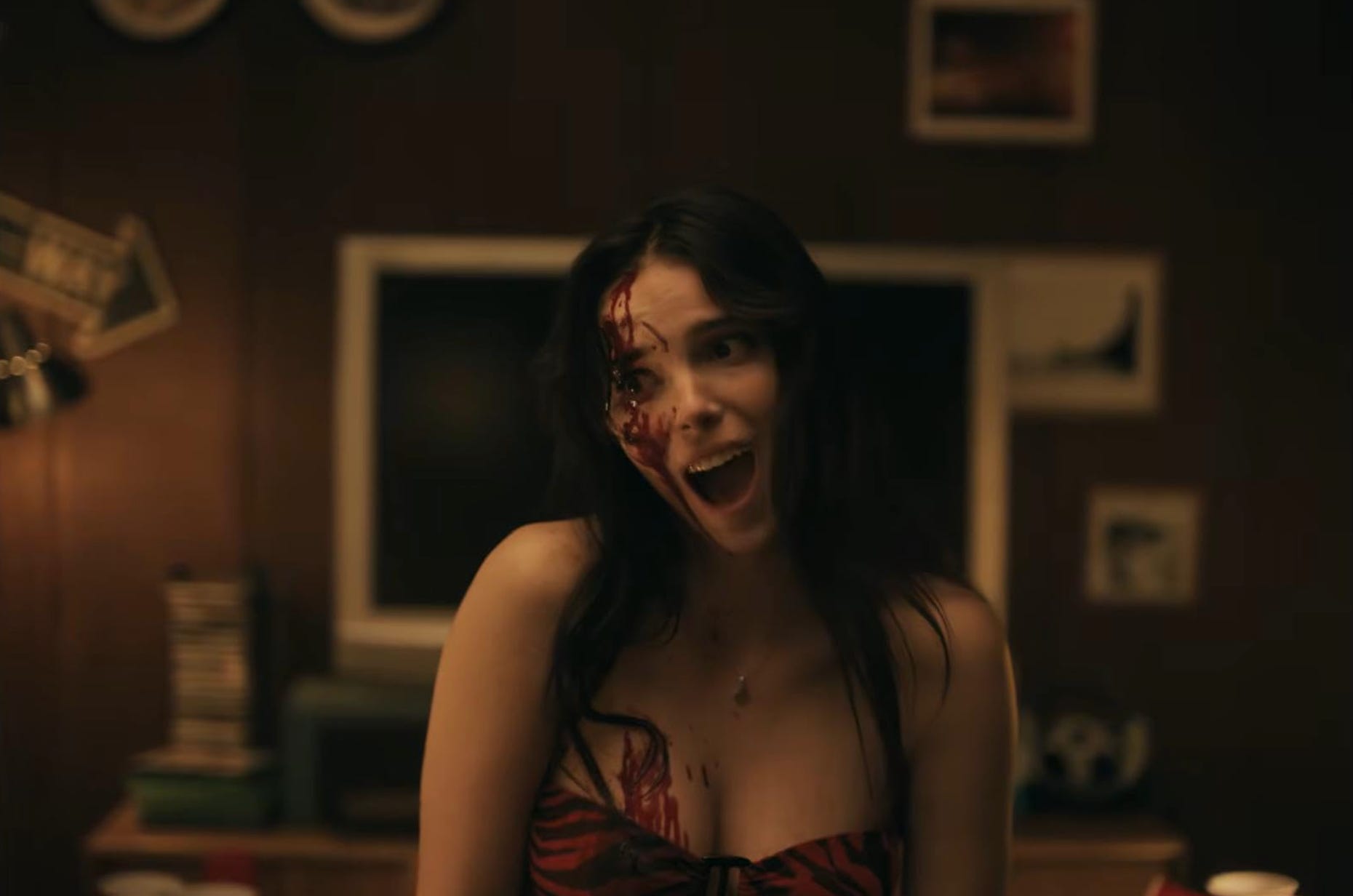
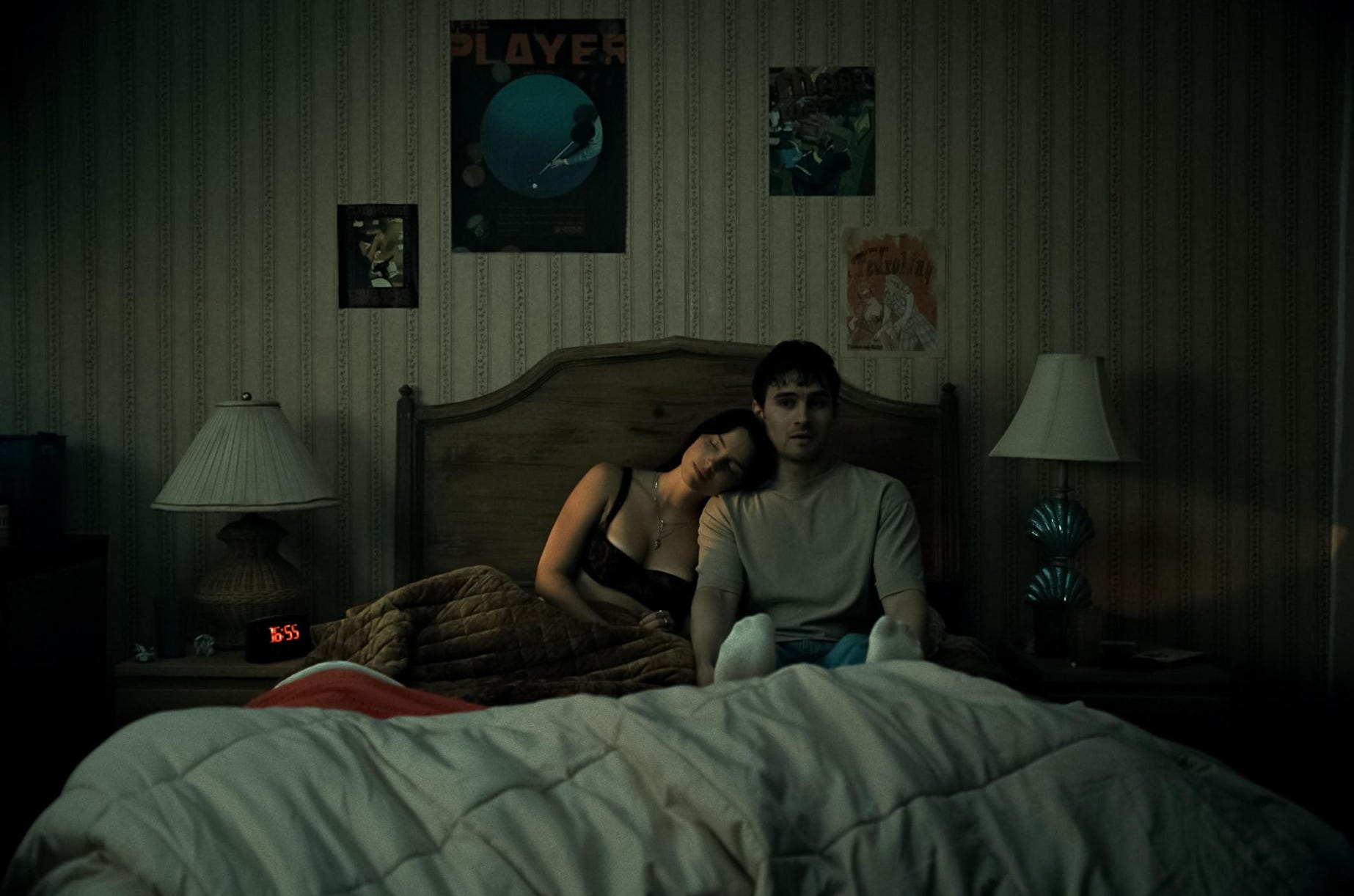
I found Obsession entertaining and reminiscent of a 2000s sleepover horror movie rather than anything A24-y, which is why I’m surprised it’s making its rounds on the discourse circuit. The dialogue was often stilted, and the sets and costumes made Netflix originals look Oscar-worthy.
I usually stop myself from extending excessive sympathy to the main characters in popcorn horror. Maybe I’m mean-spirited, but the popcorn horror genre necessitates horrifying things happening to fine, innocent people. All senses of mortal justice are out the window because horror adheres to its own logic. Not unlike popular Gothic fiction in the eighteenth century, horror movies function as a way for people to gaze at the grotesque in a shielded, detached manner, pondering light and dark and our collective morality clauses safely, so as not to unduly leer upon real, human viscera. This all, of course, occurs within reason, as there are some acts of violence too graphic and gratuitous to put onscreen.
Popular horror movies are works of fiction, works of fantasy even, that don’t promise justice or retribution to any of their characters. They often end dreadfully, but then we exit the theater. Throw away our Diet Coke ICEE at the exit, maybe feel a little spooked walking to our car. But ultimately, we’re left unscathed and even relieved to return to our regular lives. The beauty of horrifying, hyperbolic fiction is that it grounds us in what is actually real.
However, many modern, “elevated” horror films have eliminated this sense of crossing a threshold and returning home by weaving more explicit social commentary into their scripts and drawing more parallels with today’s world. Get Out (2017) was one of the first films to successfully set off this recent trend, inspiring many half-baked thriller imitations that fail to deliver the same socially charged gut punch. I’m thinking of the many eat-the-rich horror flicks that have come out of the late 2010s and 2020s so far, Ready or Not (2019) and The Menu (2022) being among the most recognizable.
These weak Jordan Peele imitations often lose me, as they refuse to commit to any one genre or sentiment, wavering between popcorn horror and straight drama, offering a whisper of social commentary that’s too pale to be especially memorable or impactful. Successful horror movies can address real horrors, or they can address nothing real at all, but they need to declare a major one way or another. Be about something or be about nothing, just be about it full-force.

The worst sin that elevated horror has committed is convincing young viewers that all horror movies have to impart some explicit, timely, politically resonant message, causing the masses to make mountains out of whisps of smoke. Horror viewers can no longer suspend disbelief, allowing atrocities to exist within particular, fictional bubbles. With how bleak our current political landscape is, it’s hard not to let real-life contemporary horrors color our perception of fictitious horror.
I’ve read a breadth of split commentary about Obsession, with some viewers declaring it a feminist masterpiece, and others dubbing it decidedly anti-woman. Whether one finds the film “feminist” or not seems to depend on whether they read Bear’s characterization as satirical. Critics in either camp argue that Bear is a “controlling and dismissive” villain, wielding fate to have his dream girl in the palm of his hands, decidedly an egotistical incel. Many critics are specifically calling out a brief scene in which Bear “sexually assaults” Nikki, banging her after they get into a disturbing argument at a restaurant in which she screams at him for asking too personal of questions.
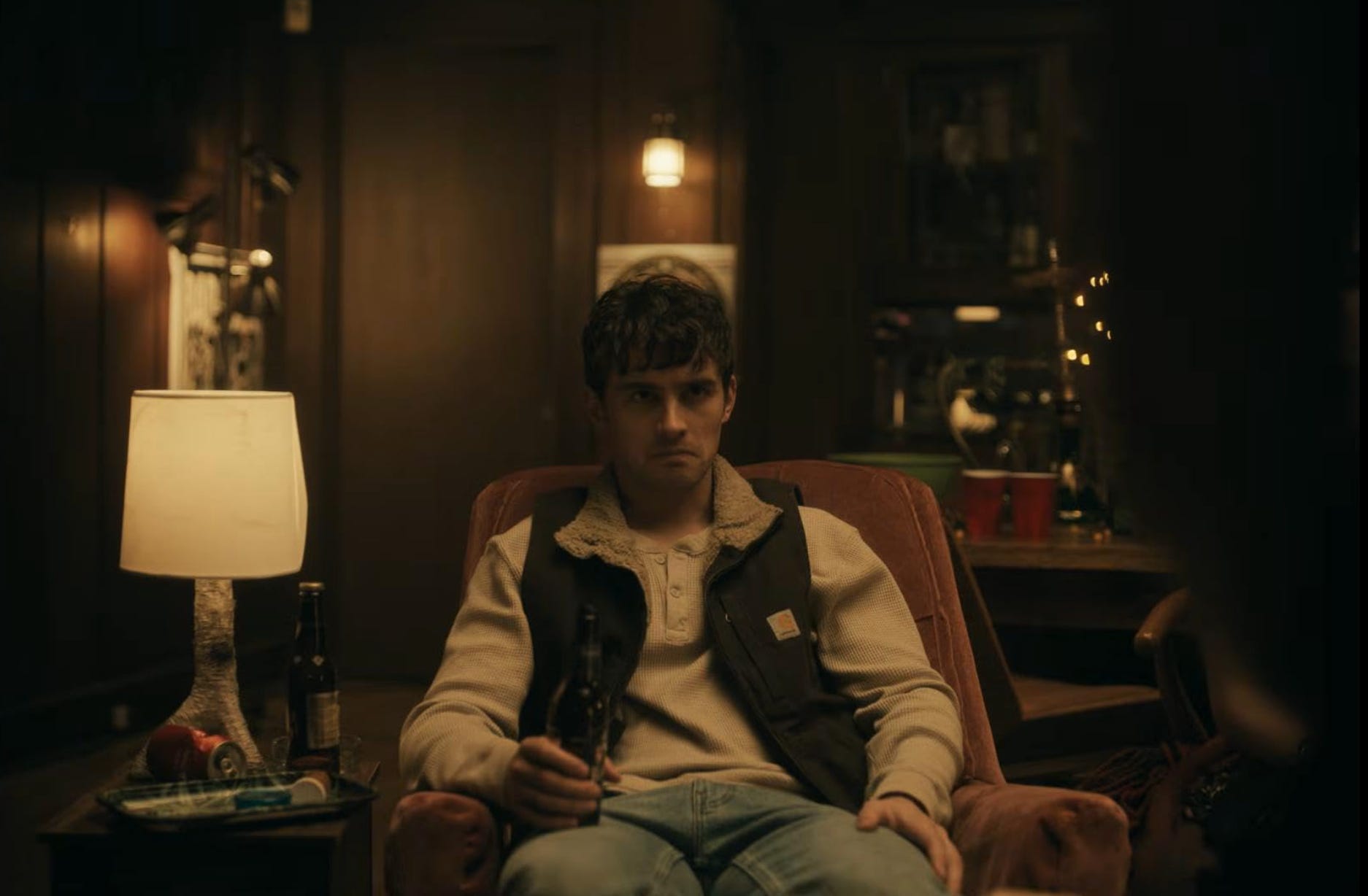
I, on the other hand, don’t find this film to be a feminist fable or an incel fantasy because I don’t think Bear, as a character, was written thoroughly enough to come off as convincingly conniving or passively entitled. None of these characters are conceived as “whole” people, but rather tried-and-true presets, conduits for jump scares. Nikki is an outgoing, cool girl, buying rounds for her friends and giving a $20 bill to a homeless man. Bear is a nice, shy, ambition-less “loser.” His loserness easily reads as incel-adjacent, since incels are losers in real life. But I think that characterization is purely extratextual, given how much color and nuance the character lacks onscreen.
True to his bland, loser identity, Bear did not make his wish thinking it would come true. Who would? How many of us have looked to the skies and asked the universe for something for the sake of it? I doubt most of us think our pennies thrown in fountains or blown-out birthday candles are direct mainlines to the hands of fate. I read his inaction in the film as less a product of calculated violence and more the result of a thick skull and willful ignorance. Throughout the film, we see him continually denying the reality of how bleak his situation is, holding on to hope that their relationship is redeemable. When his singular goal in life is realized, he doesn’t do anything to sabotage it until human lives are jeopardized.
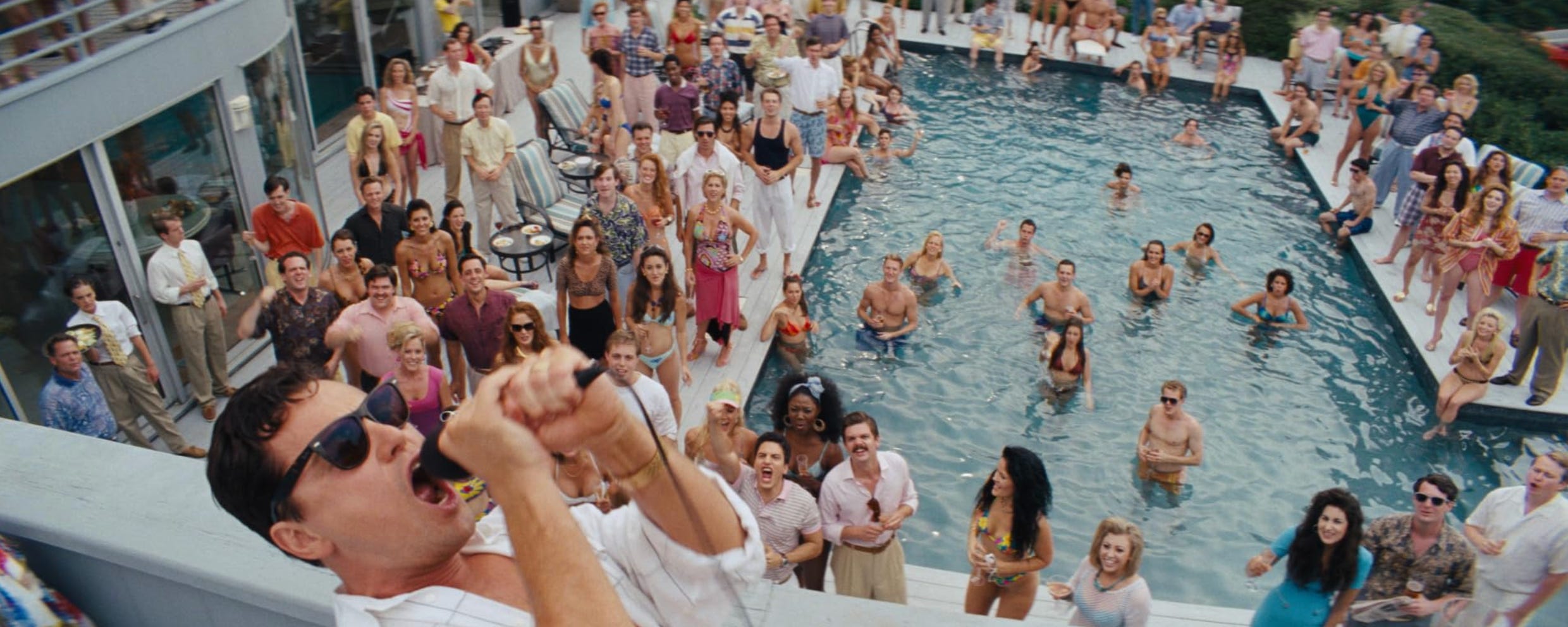
Of all the Obsession takes I’ve consumed, I appreciate Sam Bodrojan’s Letterboxd review the most. She calls The Wolf of Wall Street to mind, writing that the film is “a satire of all the things that it depicts,” critiquing late-stage capitalism while simultaneously glorifying a lifestyle of excess, and even relying on that glorification for its critique. She writes:
“As part of Scorsese’s Catholic sense of sin, the film accepts that it is an advertisement for the very worldview it decries - that it will operate this way for many. This does not mean the film is a failure, but that Scorsese has accounted for, with total precision, the many ways his work will be misconstrued, and has made these readings crucial to examining the text itself. The film would not work if the lifestyle was not enticing!”
Bodrojon writes that Obsession is akin to The Wolf of Wall Street, in that much of its premise exists on the periphery of the actual plot. Bear’s sense of entitlement and lust/lovesick delusion plays out quietly in the background of the film’s happenings. But, unlike The Wolf of Wall Street, Obsession fails to fully commit to Bear being a manipulative freak or a passive nice guy, which may have, in turn, bolstered its feminist critiques or made it more anti-woman.
Would you coerce your crush into being with you if you didn’t have to see how much the coercion pained them? Is it considered coercion if their brain chemistry is actually altered, if they actually do like you? These are the loose thought experiments Obsession offers. But given the undercooked nature of Bear’s character, I can’t say whether the film had a strong point of view on heterosexual attachment, coercion, or emotional abuse, beyond its marketing tag: “Be careful what you wish for.”
I think most of Obsession’s subtext is being filled in by the audience. Many of the reviews revering or lamenting its themes are doing more heavy lifting than the movie itself, a result of “elevated horror” and the internet thinkpiece factory making us insist on putting forth a “take.” I personally found it as deep as a tide pool, and as edgeless as a bouncy ball, which is fine. I’m of the mind that the film served its purpose, which wasn’t to make some grandiose statement on male or female manipulation, but for me to get to stand in the corner of a room and scare the hell out of my boyfriend.