

Nostalgic For a Different Nostalgia
Stranger Things S5 Isn’t Grounded in Reality. But Neither Is Our Reality.

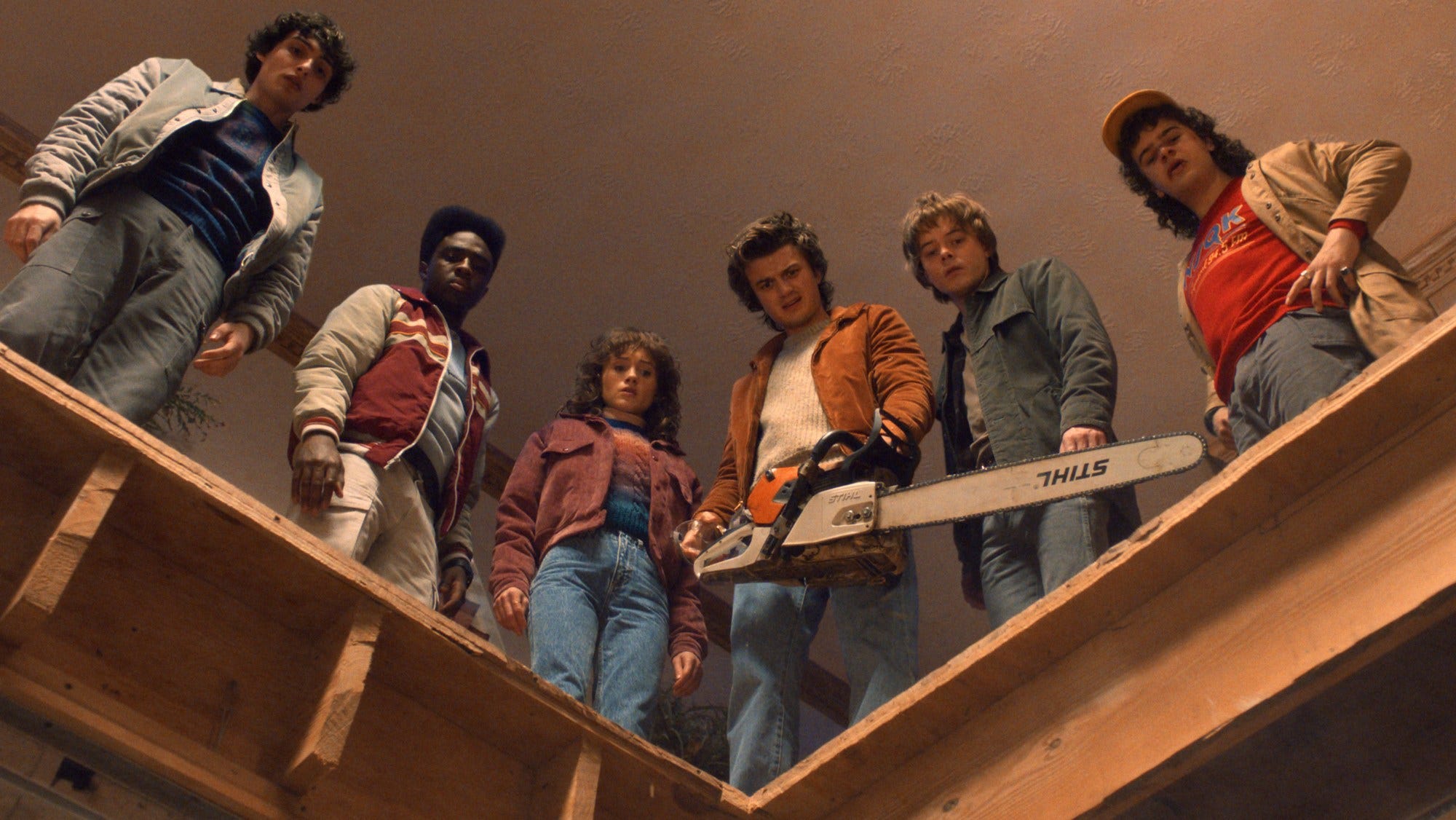
The first season of Stranger Things premiered on Netflix in July 2016, when I was on the precipice of turning sixteen years old, bumping Views and Anti, and wondering where on Earth Taylor Swift had gone. I heard about the show through word of mouth - I was visiting my cousins in the San Juan Islands, and we ran into a friend of theirs on the beach. The conversation shifted to what we had been watching lately, and the friend told us about a new show on Netflix that we needed to check out, but the details stopped there. The only Netflix original series I had watched before this was Orange Is the New Black, which isn’t exactly family viewing. I had no idea what to expect.
My cousin and I pressed play when we got home that night. The first ten minutes of the pilot disoriented me. A man wearing a lab coat running around in some kind of brutalist government science facility, followed by little boys playing Dungeons & Dragons, followed by one of the boys mysteriously disappearing in his shed. I was able to place the time period in the 1970s or 80s without needing a title card - Will Buyers had the same haircut that my dad had as a young boy. Placing monsters in this time period is something I hadn’t seen yet though. The monsters I’d encountered in media thus far lived in fantastical, Percy Jackson- and Harry Potter-esque worlds. If they existed on our Earth, it was during some high-tech, dystopian future, in which science had progressed enough to engineer them, like in The Hunger Games or The Maze Runner.
But placing monsters in the past is a part of Stranger Things’ special sauce. The first season moves at a rather easy pace, relying as much on 1980s Americana nostalgia to keep viewers engaged as it does actual plot points. The show’s sensory details - the synth overture, the thick mopheads of hair, the Eggo waffles, music by The Clash, Spielberg-inspired cinematography - built a world that I had less conscious reference for than my parents, but that I was nostalgic for nonetheless. In doing so, it also conjured a feeling of future nostalgia - a sense that viewers might feel sentimental for, not the 1980s per se, but Stranger Things’ interpretation of the 1980s in the near future.
Stranger Things was originally intended to be a limited series or anthology, which would have involved tying the first season’s characters and plotlines up with a bow - likely concluding with Eleven sacrificing herself to protect her friends in Hawkins, according to the show’s creators Matt and Ross Duffer. Subsequent seasons may have dealt with new characters encountering otherworldly beings at Hawkins Lab and in the Upside Down. But, of course, the other ingredient in the show’s secret sauce is the children. Specifically, the core five children at the heart of the first season, whose tight bond, ingenuity, and fearlessness endeared them to kid and adult viewers alike. It wouldn’t make sense to dispose of them after the first season, especially in hindsight. Stardom awaited them on the other side of the show’s airing. It was the first time, at least in a while, that a PG-13 series starred actors mainly under the age of 13, giving the show an extra edge. The kids played off this edge and perceived fearlessness by acting as kids do on late night talk shows, roasting Jimmy Fallon, rapping Nicki Minaj’s “Monster” verse off the cuff, and racking up YouTube views. The kids should and would stay.
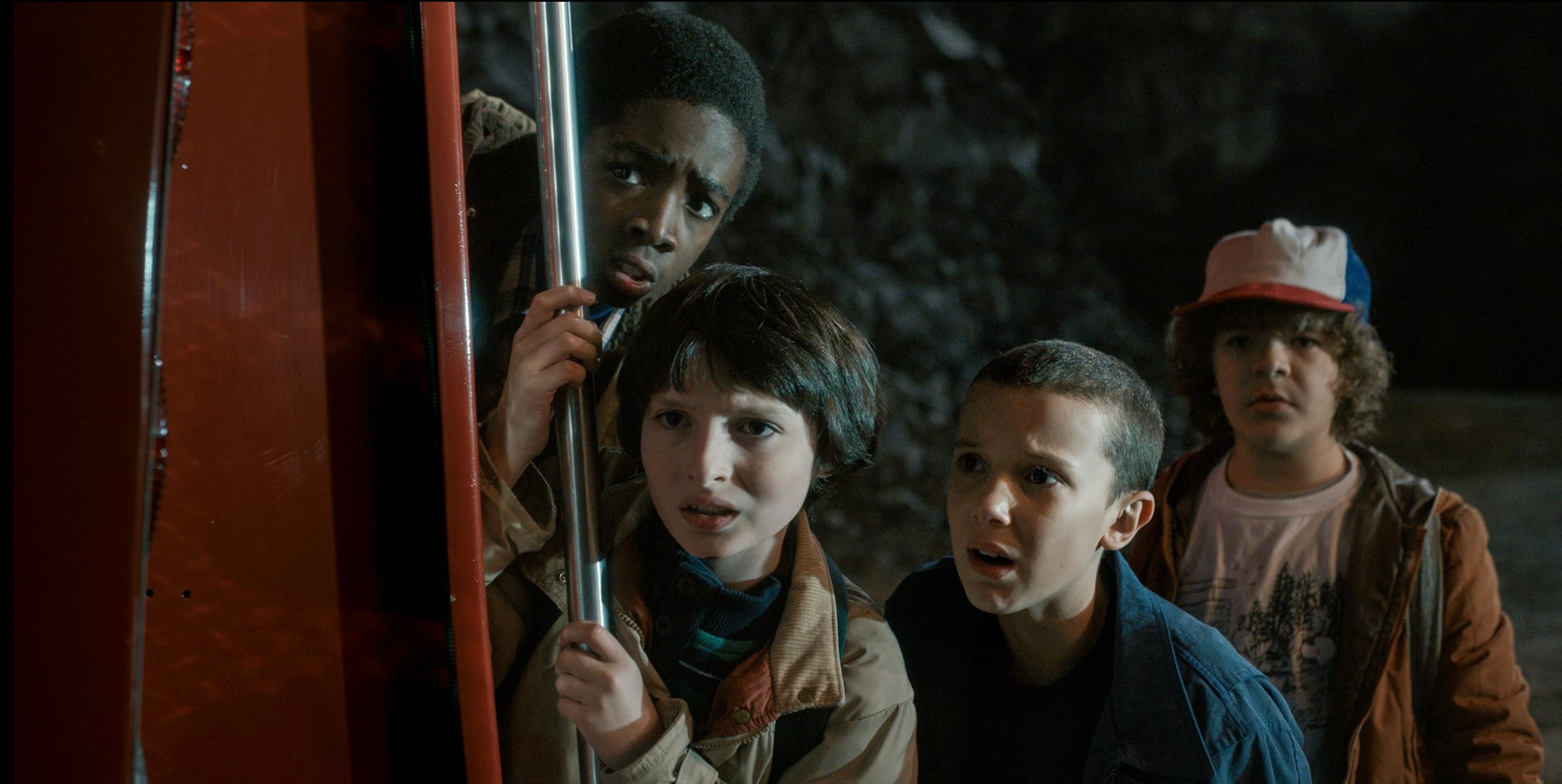
But now it’s 2025, and nine years have passed. The kids who were saving the world in 2016 are now young adults saving the world, with dropped voices and acting abilities that didn’t completely mature with them. The fifth and final season of Stranger Things is being drawn out like a dying fountain pen, the color running thinner and thinner until there’s nothing at all. The first part premiered on Thanksgiving, the second part is premiering on Christmas, and the finale episode is premiering on New Year’s Eve. So far, each episode has been about an hour or longer.
I watched the first part on Wednesday evening with my sisters while I prepped Thanksgiving pies and side dishes. The fifth season’s premiere is smartly timed. The 80s horror aesthetic is a great accompaniment to fall in the American Northwest, with rain pattering on the window and the smell of thyme and brown butter emanating from the kitchen. It was a fun watch with my little sisters in that setting, blankets pulled up to our chins, fireplace crackling.
But the show’s technical prowess has slipped. You can feel it scrambling to maintain relevancy as it careens towards a slow death. The first season was marked by a lot of well-executed negative space. A young boy disappears, and a young girl appears, crushing a Coca-Cola can with her mind. A grief-stricken mother sees a message in her blinking Christmas lights. Bike rides on rain-speckled streets, flashlights illuminating the dark woods. Viewers were able to fill in the blank spaces with their imaginations, before the answers were slowly pieced together - shown, not told.
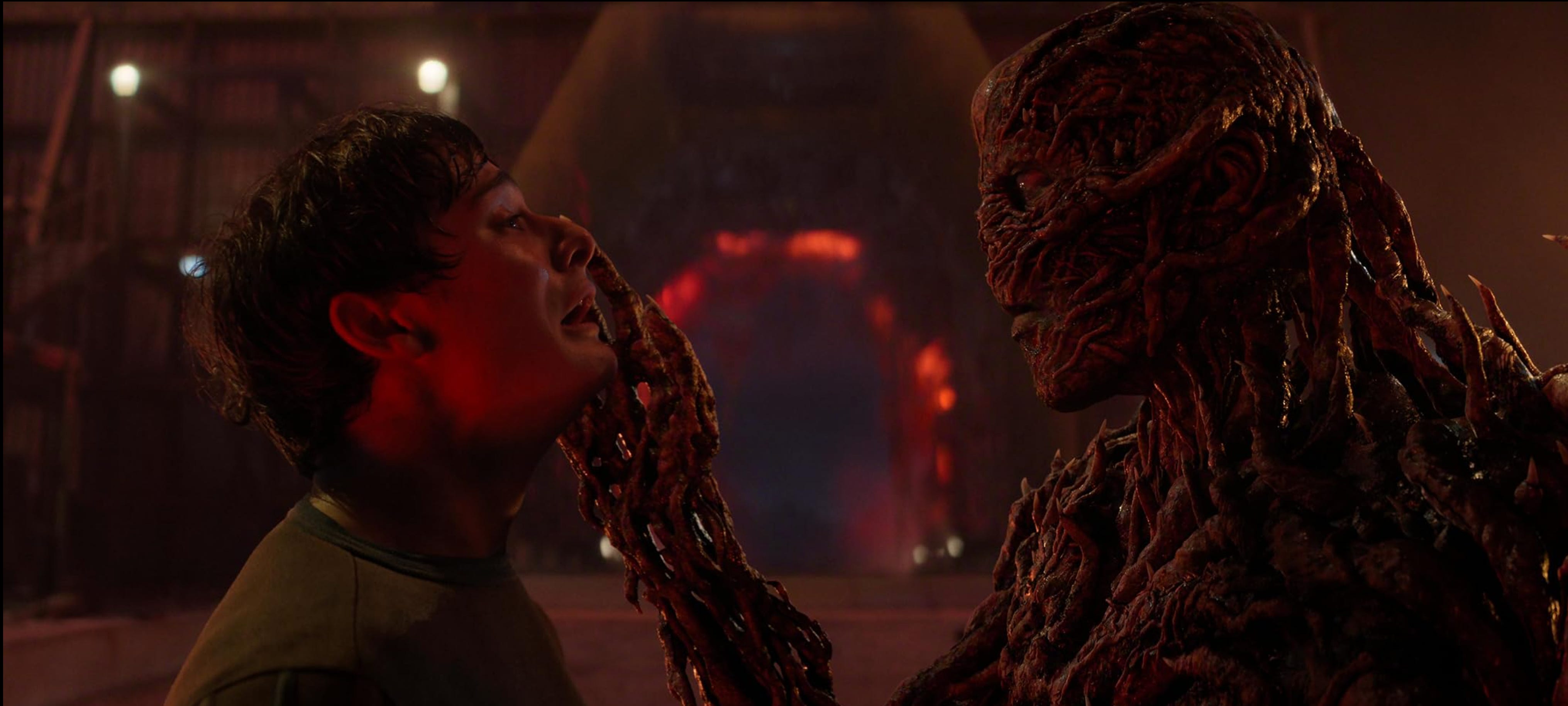
Now, in an attempt to stretch the series across several more seasons than it was intended, the writers are trying to expand and complicate a mystery that was once simple and coherent. A hole rips in the fabric separating our world and the hellish parallel universe existing underneath it, causing monsters to wander onto our side - easy enough to understand, but too tidy. So it turns out the monsters are all connected via a hive mind, with the evil being, “Vecna,” at its center. Vecna hijacks the minds of his attackees, suspending them in a fiery, lava-burbling mental underworld and snapping their limbs like twigs with his thoughts. Vecna was once “Henry,” a telekinetic boy experimented on by the government like Eleven. Henry became monster-like, for some reason, after being banished to the Upside Down, the environment mutating his appearance. He attacks people in the real world who “have trauma” because their minds are more mentally vulnerable, like a weak Gmail password. And the only thing that can pull his victims out of their mental hijacking is - checks notes - music. Because human minds associate music with powerful memories. Are we following?
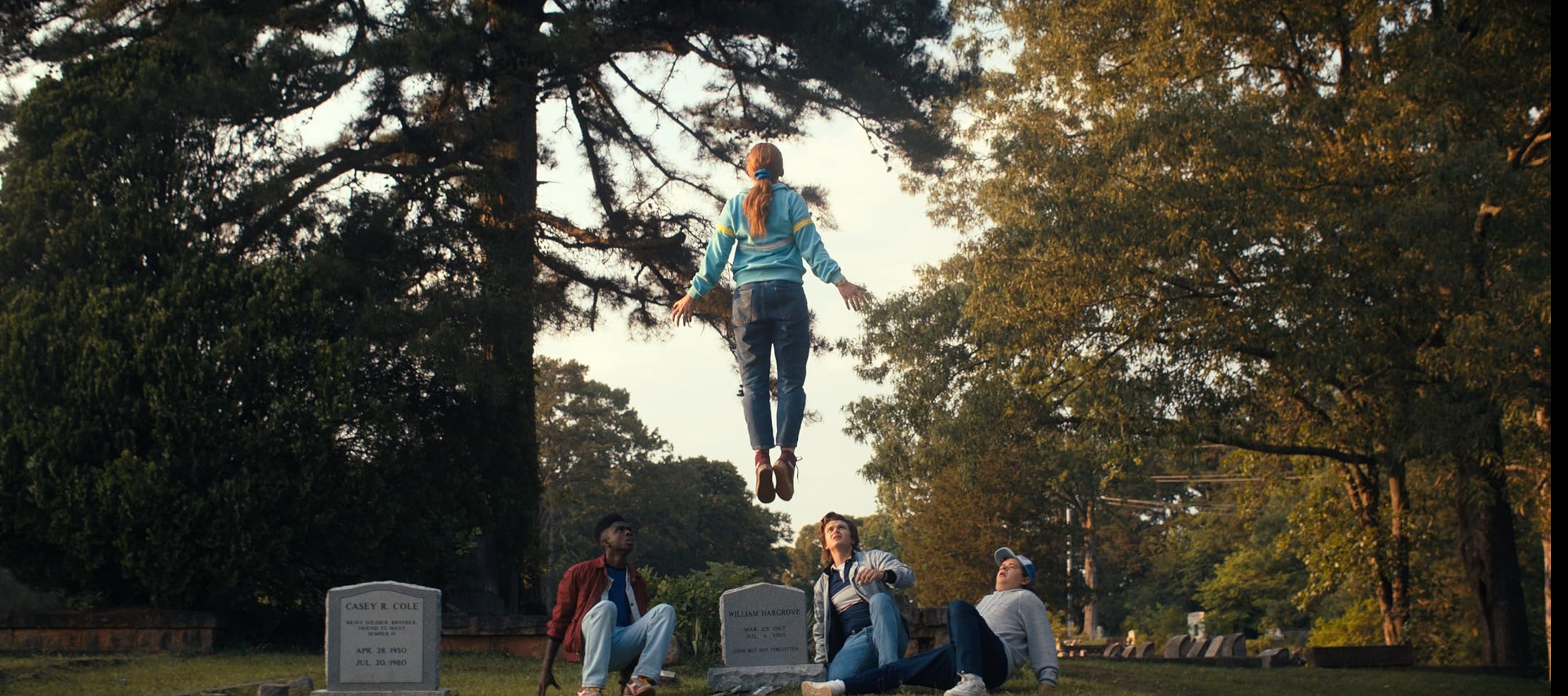
The outcome of these plot complications and nearly doubling the cast size isn’t totally bad, just different. Stranger Things now has a Marvel-adjacent cinematic universe, which, of course, lends itself well to merchandise and potential series spin-offs. Moving this whale of a plot forward requires a lot more dialogue - the delicious negative space in the first season has diminished. Now it’s all “He’s right behind me, isn’t he?” and “Sooo, what’s your plan, exactly?” to keep things chugging. The show went from feeling quite cozy and polished to blockbuster-esque. Netflix is clearly trying to wring every coin they can from it, given it’s one of the last decent original series they’ve put out. Or perhaps the streamer is trying to align the show closer with Warner Bros. IP, which will be entering Netflix’s catalog if their $82.7 billion acquisition is passed, likening Stranger Things to DC Comics, Harry Potter, and Game of Thrones.
All the same, Stranger Things also feels different because our relationship to 1980s America feels different, at least compared to how it was in 2016. The series premiered at the tail end of the bright-eyed Obama administration, when the past was thought to be something we had learned from. Much like the Upside Down leaking into Hawkins, I can sense the real world unconsciously permeating the fictitious when I’m watching the series. Not only are there numerous scandals surrounding the cast members (David Harbour’s sex addict allegations, Noah Schnapp’s outspoken support of Israel, Millie Bobbie Brown’s whirlwind marriage and baby adoption at twenty-one), but nostalgia is even more politically-charged than it was nine years ago. Especially Reagan-era nostalgia, which has served as the backdrop to Project 2025.
A romanticization of the past still fuels Stranger Things’ success, but we’re no longer romanticizing the 1980s, the original referent. Instead, season five incites nostalgia for season one’s interpretation of the 1980s, which is suspended in its own kind of patriotic, middle-class bubble. The monsters are interpretations of American anxieties of that period and now - a Cold War, nuclear destruction, the spread of fascism. And by defeating said monsters with good old American elbow grease - a rogue sheriff, a baseball bat with nails hammered into it, a powerful young girl and her brave friends - said anxieties are also squashed in the process. The show is now two mirrors pointed at each other, projecting infinite refractions of images that no longer resemble a distant past. Stranger Things now dwells squarely in the fantastical. But maybe that resembles our current world better than an approximation to the 1980s ever did, with generative AI making meaning and image out of thin air in a way that progressively mimics human thought and appearance, but never exactly. American interpretation of reality couldn’t be more scattered. Stranger Things is simply a fantasy away from our own fantasies, a hell away from our own hell.
Sharp analysis of how the show's relationship with nostalgia has mutated over time. Your observation that we're now nostalgic for Season 1's intepretation of the 80s rather than the actual 80s itself captures something profound about media consumption in the streaming era. The negative space comment is especially astute,the early seasons let viewers project their own anxieties into the void while later seasons felt compeled to over-explain everything. It's like the difference between a good horror film that keeps the monster off-screeen versus one that shows too much CGI.
loved reading this. have totally felt the same watching the new episodes! there was also something about the first few seasons when most of the actors were more unknown vs now when we know a lot about their lives like you said… really curious to see how things will wrap up fully