

Fandom Only Costs You Everything
Parasocial Ties Lift All Boats. A Ticketmaster Investigation

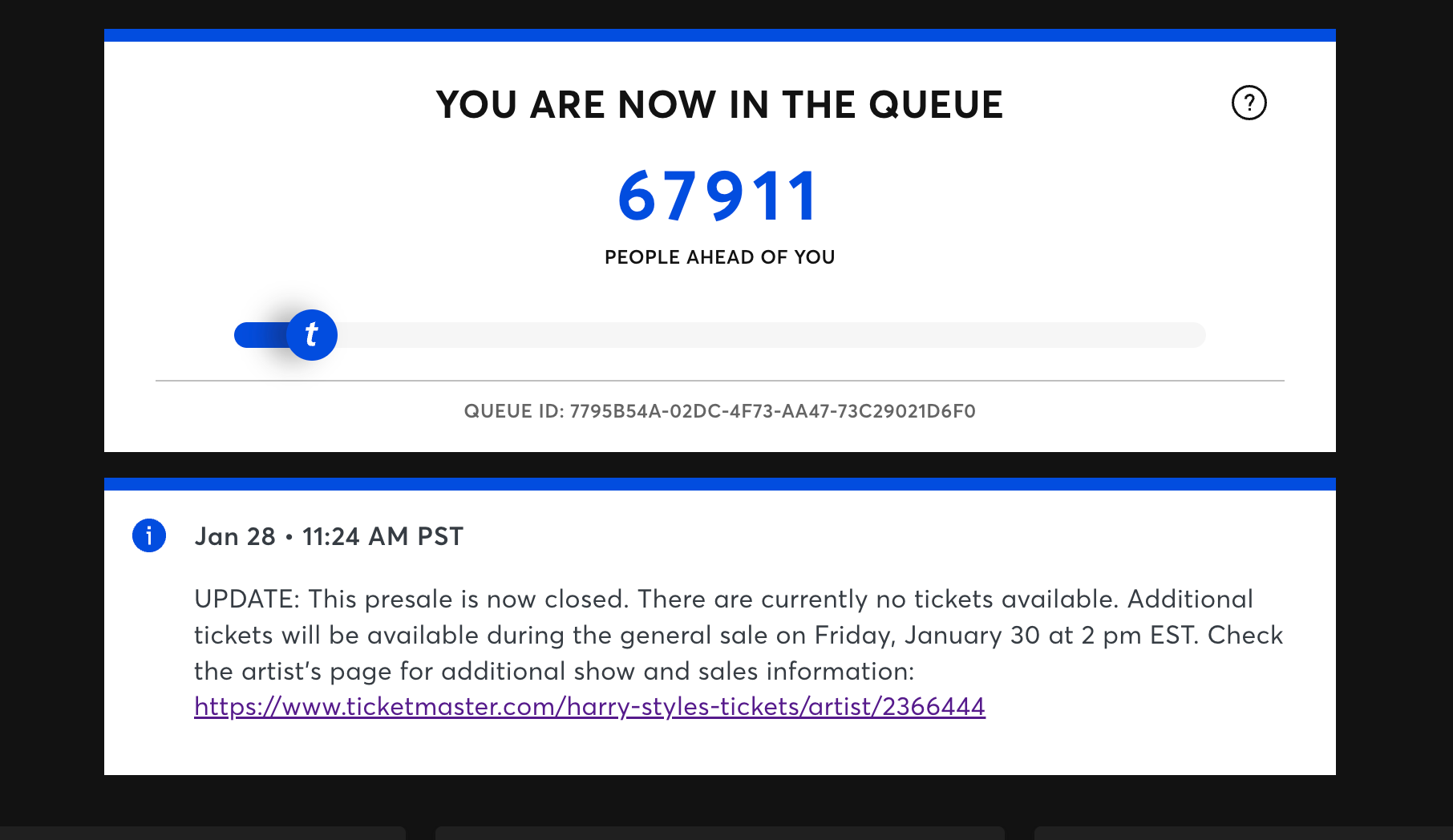
I’m typing these words in a Google Doc that’s sharing a split screen with a Ticketmaster tab. It’s my fourth day attempting to get Harry Styles tickets off a Ticketmaster presale. The screen reads that the next sale starts today at 11:00 AM EST, and below that, a countdown shows 1 hour and 19 minutes remaining. My eyes keep darting over to it as I try to write. Regardless of what they’re counting down to, numbers descending on a screen are always going to elicit some anxious excitement, be it a bomb counting down to detonation or CNN counting down to the New Year.
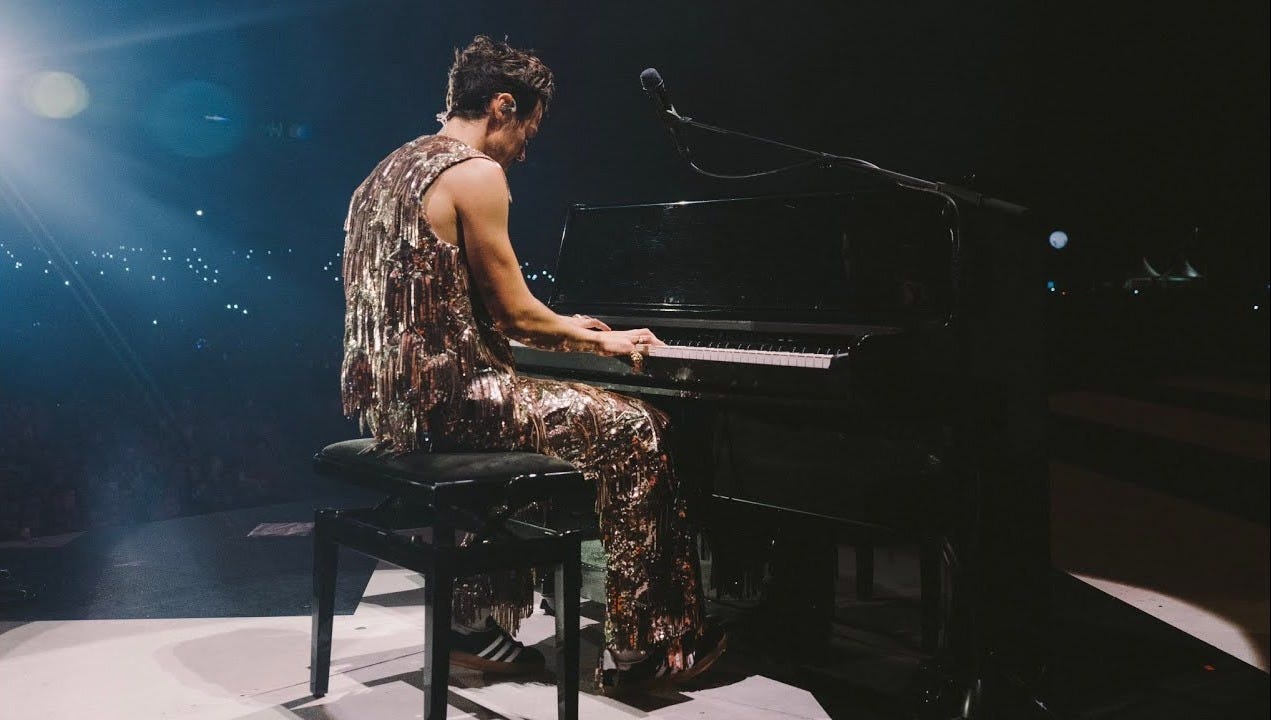
The prospect of seeing Harry Styles in concert is even more exciting than an explosion and certainly a ball drop. The last live show that Harry Styles performed was the final stop on his behemoth Love on Tour in Reggio Emilia, Italy, on July 22, 2023, nearly two and a half years ago. Love on Tour spanned almost two years and two album cycles. Styles’ last new music release was his third studio album, Harry’s House, which came out nearly four years ago. This was, of course, his last music release before “Aperture,” the lead single off his forthcoming album Kiss All the Time. Disco, Occasionally, was released on January 22, 2026.
The single, album, and tour announcements, all occurring at the turn of the new year, were met with global delirium. There is nothing like a well-timed break from the limelight to make the public salivate for a star like Harry Styles. Since breaking off from One Direction, Styles has become a rather private person, reticent on social media, and only engaging with higher-brow press when actively working. When he’s off-duty, he’s anywhere but Los Angeles, running sub-three-hour marathons in Berlin and Tokyo, helping fans parallel park in Rome, and holding hands with Zoë Kravitz in coordinated street style fits around NYC. His return to music has been speculated for years now, and it’s finally here, like Waldo broadcasting his exact coordinates for the masses.
A drought certainly gets people scrambling for water, and that seems to be Harry Styles’ strategy, as well as Ticketmaster’s. Ticketmaster has had a rough couple of years, in that the company has made the ticket-buying experience for arena and stadium shows more arduous for the general public than ever before. The Ticketmaster presale for Taylor Swift’s The Eras Tour was so excruciating that it earned its own Wikipedia page.
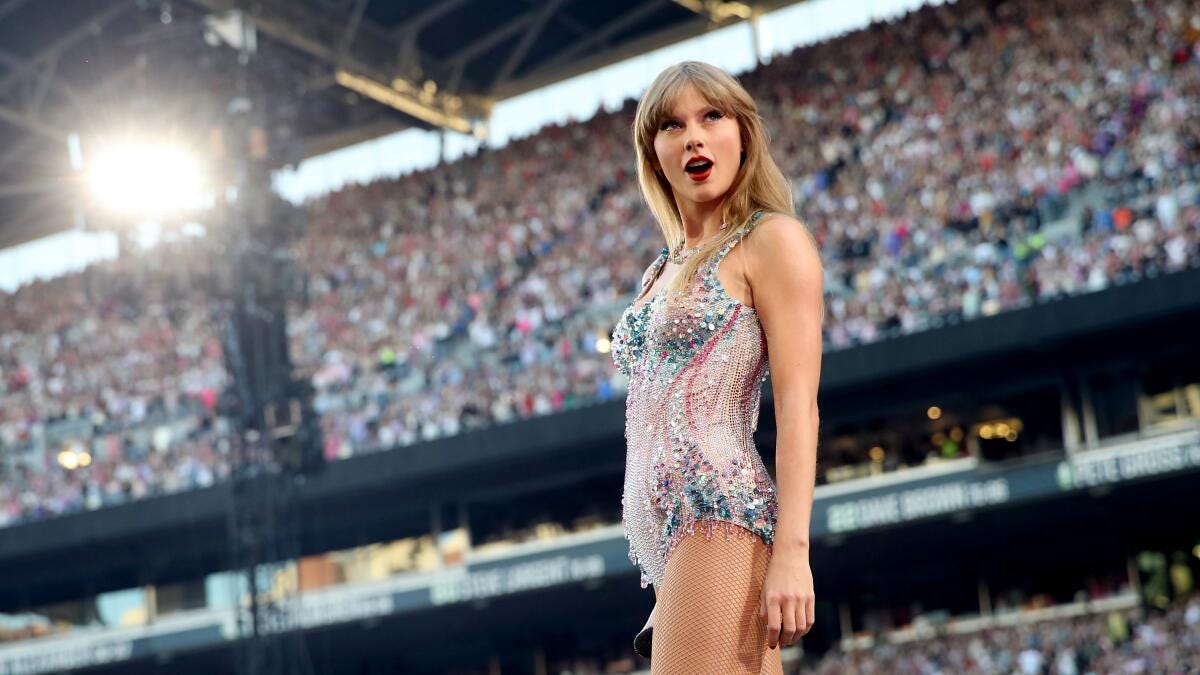
In the U.S. alone, 3.5 million people registered for Ticketmaster’s Verified Fan presale for The Eras Tour, which went live on November 15, 2022. The website crashed within an hour, either logging users out or leaving them in a frozen queue. Scalpers purchased large numbers of tickets and resold them for exorbitant amounts; I recall seeing five-figure floor tickets on StubHub at the time. In March 2025, a cybercrime duo based out of New York was arrested and charged with grand larceny, computer tampering, and conspiracy charges after stealing and reselling over 900 Eras Tour Tickets on StubHub, earning over $600,000 in illegal profit.
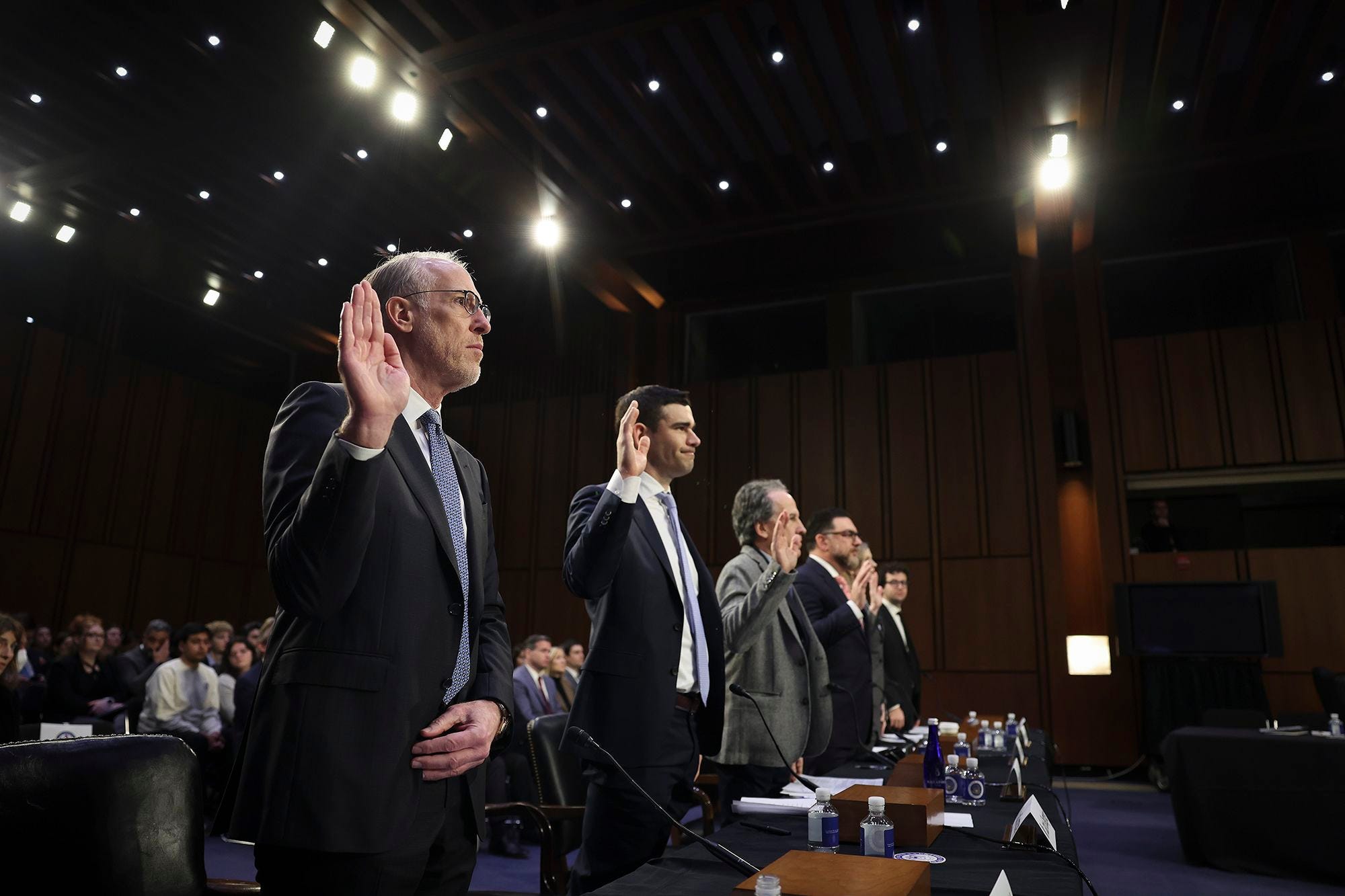
All of this garnered a U.S. congressional hearing, public tsk-tsking from Joe Biden, and an antitrust lawsuit against Live Nation-Ticketmaster, alleging unlawful business practices and seeking to dissolve the merger. In the end, Ticketmaster agreed to abolish junk fees, a helpful, but ultimately symbolic act that hasn’t at all affected the egregious sticker prices themselves.
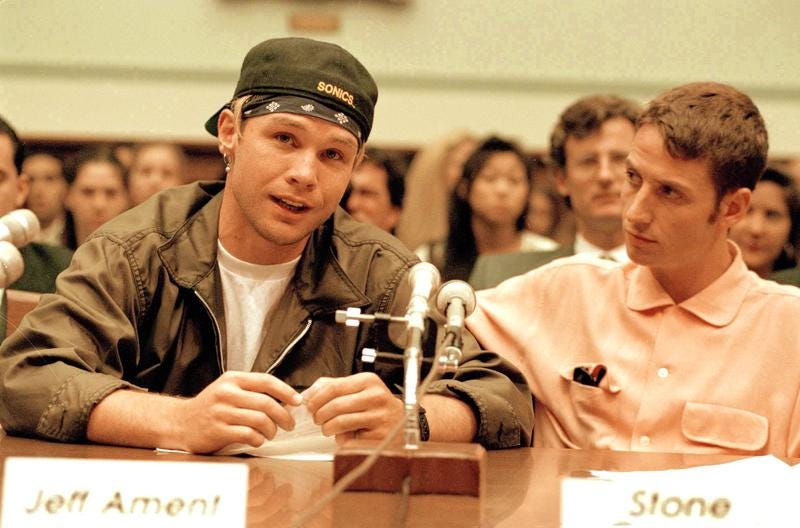
Hot legal water isn’t novel to Ticketmaster; the company found itself in contact with the U.S. Department of Justice even before merging with Live Nation Entertainment in 2010. In 1994, Pearl Jam filed a complaint with the DoJ, claiming that Ticketmaster had a “virtually absolute monopoly on the distribution of tickets to concerts,” but no governmental action was taken. Since the 2010 merger, Ticketmaster and Live Nation have received countless public backlashes, with media attention being drawn to their crooked “dynamic pricing” model, in which ticket prices increase or decrease in real-time based on high demand and seat availability, at times doubling or tripling in cost during high-traffic sales.
Suffice it to say, Ticketmaster has transformed public expectations about the costs of concert-going in the twenty-first century. As with all goods and services, tickets have steadily increased in price year-after-year, but have taken a dramatic hike in the 2020s, no thanks to The Eras Tour. In 1996, a concert ticket averaged $25.81, or $49.74 in current dollars. Since then, concert prices have increased by 428.7%, with the average ticket costing $136.46. Since 2021 alone, ticket prices have increased by about 80.5%, 4x inflation.
As of November 2025, Ticketmaster controls over 70% of the ticketing and live events market, leaving few viable alternatives for buying tickets to major U.S. concert venues. Ticketmaster gets away with price gouging because of its monopoly, but also because of the extreme nature of fan culture. Each year, when a large pop act announces its next tour, Ticketmaster sees how far it can push the envelope, dancing along the boundaries of gross exploitation before stepping over completely. The reality is that it’s barely exploitation in a textbook sense and likely in a court of law. People purchase four-figure nosebleed seats quite willingly, at least if it’s for Taylor Swift or Beyoncé. Ticketmaster could probably start charging a literal arm and a leg and still sell out.
Following The Eras Tour in particular, it’s clear that stans, and the parents of stans, are willing to shell out thousands of dollars to see their idol perform in the flesh, even paying for travel and lodging to attend multiple tour stops. Stadium tours have effectively become a new kind of middle-class American vacation, with expenses rivaling what a large family Disney vacation costs.
What’s made the Harry Styles ticket-buying process even more agonizing is that he’s playing sixty-seven shows across a mere seven (seven!) international cities. The only U.S. tour stop is New York City, leaving all of the U.S., all of Canada, much of Central America, and undoubtedly much of Western Europe fighting over not only the same tour dates, but the same flight tickets, hotel rooms, and dinner reservations. It’s not just the illusion of scarcity, but scarcity itself, making the experience all the more desirable.
Traveling to see a major recording artist perform, be it at a music festival or an international tour, is now a standard concert experience, even if you live in a major city. I’d bet that Harry Styles, in particular, will never tour again, favoring long-term residencies instead. Not only is it easier on the singer’s body and lifestyle, but Styles’ management company, Azoff Music Management, has a major stake in The Madison Square Garden Company, giving them ample incentive - and leverage - to put butts in Garden seats.
To come completely clean with you, I’ve already seen Harry Styles perform five times: twice with One Direction and thrice as a solo act. I’ve been a superfan of his since I first watched him run around the beach, floppy hair, plaid button-up, and all, in the “What Makes You Beautiful” music video. I’m so blinded by my history with him that I honestly can’t even tell if his music is good, and I barely care. I don’t know who I would recommend it to, because Harry Styles is less of a musician and more of a vessel. His concerts, like the One Direction concerts and like The Eras Tour, are a kind of compulsory pilgrimage for people intertwined with online fandom culture, past and present.
Harry Styles is a pretext for gathering and reveling in nostalgia and attempting to make the magic, ephemeral online world of stanning into something physical. For the brief hours that you’re in the arena at a Harry Styles concert - dancing, singing, adorned in feather boas and sequins - you feel a sudden, unparalleled sense of community, as if someone snapped their fingers and made visible and audible what was once only in your head, only on your phone. It’s the kind of high that keeps you running back to the queue, willing to disburse your hard-earned savings, in hopes that you’ll feel that feeling again. It, at times, feels like less of a choice and more like an obligation.
Diehard fans of Bruce Springsteen, Michael Jackson, and the like surely purged their cash and time attending multiple tour stops and camping outside arenas back in the day. But social media has only amplified the sense of closeness one feels to an artist, the sense of kinship one feels with a fandom, and, of course, the dreaded fear of missing out. Modern culture prioritizes instant gratification; we see it in the technological advancements we deem “innovative.” The influx of delivery apps and noninvasive cosmetic procedures. The onslaught of sequels and reboots to beloved films. The need to rehash and recapture a spark that’s only sacred because it’s now dead and done. It’s not enough to have had an experience seeing your favorite artist in concert; you need to have it again and again and again.
Ticketmaster has inhuman, vulture-like business practices, which are enabled by a government that cedes too much power to singular corporations. They’re also enabled by a culture that thrives on parasocial ties to entertainment fixtures, be it Sleeping Beauty’s castle or Harry Styles. A culture that encourages you to keep pressing the Happy button, no matter the cost or monotony. Why travel to another country and experience a new culture when you can just do the same thing again and again, and try to recapture its initial glow, for the same price?
In any case, I’m now number 62,000-and-something in line for the Harry Styles queue and told by the waiting room bot that $50 tickets are now completely sold out. Figures. But my mom texts me and tells me she’s number 218. There definitely won’t be any tickets under $100 left, but maybe there will be some for under $1,000? Maybe some sun will shine on us.
i saw one direction thrice and was front row twice and i've never seen harry, even though i would really like to. i am just not competitive in nature and there being so much pressure around buying something that's supposed to be fun is agonizing to me.
i love how you write about these things with such nuance and an honesty about your own uncertainty about it all (eg: understanding that larger forces are at play here whether they be financial/systemic or communal/temporal). like yes! it's all happening at the same time! it's not just one thing.